Best Picture Winner
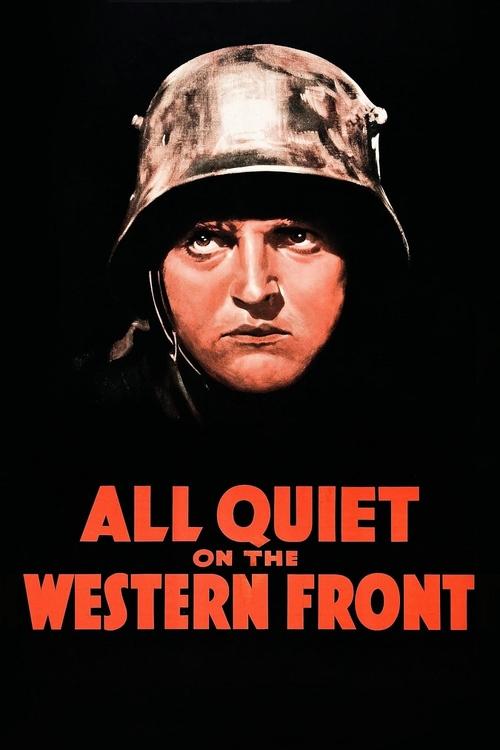
All Quiet on the Western Front
Director: Lewis Milestone
Studio: Universal
A young German soldier's harrowing experiences on the Western Front during World War I.
From the Worthy Podcast
How film can be a form of art that is as close to reality as possible. The truth found in the stories of film. Being able to see the reality and horrors of war, or at least as close to the truth of it, through filmmaking.
Talk about the Pre-Code era of filmmaking, it started in 1929ish. How AQOTWF fits into this era of filmmaking which allowed you to be more realistic on screen. How this era of filmmaking would set up the next few years of Best Picture winners because of the material that was able to be used on screen.
The formative years of the narrative form had been very dependent on adapting ready-made texts, particularly literary texts. Despite the fame of the play-to-film adaptations (because of the similar manner in which they are presented which is through visuals), novels actually share more similarities with films in terms of telling the story. This is mainly because of how there is more fidelity in terms of translating the literary essence of a novel to the cinematic context of a film. If we notice, plays are very much heavy on the dialogue thus a reliance on dramatization, whereas the novel provides us with insight beyond the dialog. Of course, there is no literal fidelity in the novel-to-film adaptations thus the constant alterations which alter during the production of the adaptation. One instance of such alteration would be the compromising of the length of the story in order to fit the cinematic standard of a two-hour film. (Keep all this)
Here we need to take a peek at the various ways a novel can be adapted. A novel is closely adapted when most of the novelistic elements are retained during the adaptation process. As for the loose adaptation, a majority of the cinematic elements are dropped and the literary text was simply used as the point of reference for the movie. Thirdly, the film is an intermediate adaptation when it’s between being closely and loosely adapted.
It emerged during the transition of film from being a cinema of attractions to a narrative style. Filmmakers also realized that if they were to attract an audience, particularly well-off audiences from the middle-class, they had to make sure that they appeal to their interests, thus adapting popular classical literature commonly enjoyed by the middle-class.
It is also important to remember that in adapting a text, it means that its novelistic or theatrical (if it’s from a play) elements are being translated to a more cinematic context which is why there is and always will be alterations to be made in the adaptation process in order to fit the traditional filmic standards of cinema.