
Best Picture Winner
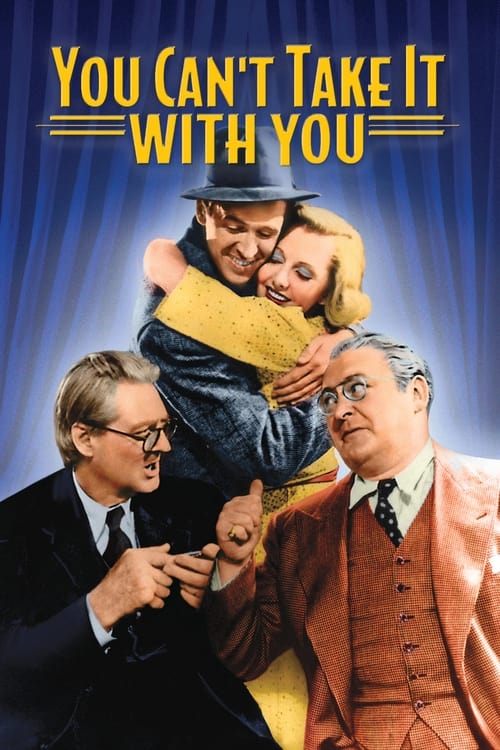
You Can't Take It with You
Director: Frank Capra
Studio: Columbia
The son of a wealthy family falls in love with a woman from a quirky, free-spirited household.
From the Worthy Podcast
Bio on Frank Capra and then list 5-ish traits about his directing style across his 3 Best Director Wins now that we have seen all 3. It Happened One Night (1934), Mr. Deeds Goes To Town (1936), You Can’t Take It With You (1938)
Movies should be a positive expression that there is hope, love, mercy, justice and charity. . . . It is (the filmmaker’s) responsibility to emphasize the positive qualities of humanity by showing the triumph of the individual over adversities.
--Frank Capra in 1960
Capra often attributed his conversion to "social comedy" to a visit from a "faceless little man" introduced to him during a period of illness by a Christian Scientist friend. The man, whose name he never learned, pointed out that he was able to "talk to hundreds of millions, for two hours--and in the dark. The talents you have, Mr. Capra, are not your own, not self-acquired. God gave you these talents; they are His gifts to you, to use for his purpose." Inspired, the director set about conveying a message to the American people: "My films must let every man, woman, and child know that God loves them, that I love them, and that peace and salvation will become a reality only when they all learn to love each other." --Frank Capra (quoted in "World Film Directors", Volume One)
.”
Capraesque or Capracorn, the terms express the unique tone of a Capra movie, that mix of idealism and cynicism that both draw our affection and force us to keep a distance. They are dreams, they are impossibilities, they are pure, unvarnished wish-fulfillment, and though the timing may not always be right for them, their themes are certainly timeless.