
Best Picture Winner
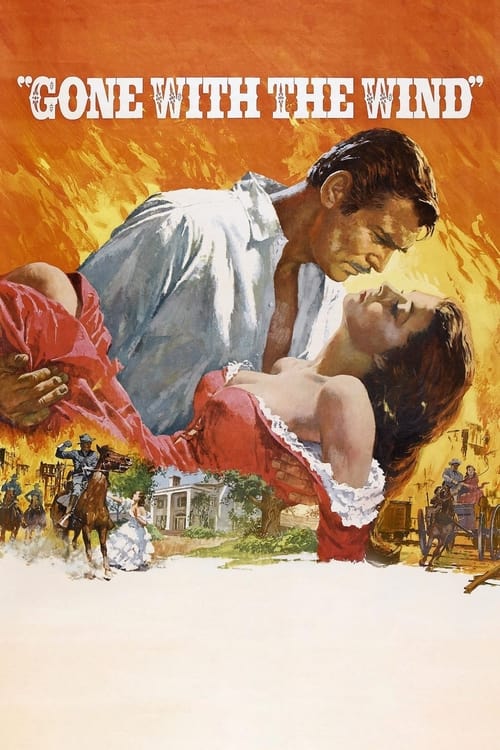
Gone with the Wind
Director: Victor Fleming
Studio: Selznick International
A manipulative woman and a roguish man carry on a turbulent love affair during the American Civil War and Reconstruction.
From the Worthy Podcast
Akira Kurosawa once said “It is the power of memory that gives rise to the power of imagination”.
So when is the last time you’ve had a dream in black and white? When is the last time your memories or imagination were limited to the grey scale? If motion pictures are limited to sound and images then without color, filmmakers are bound to a false reality set by the technology of their time.
This is a limitation we cannot discredit black and white films for but instead something to honor them with as the filmmakers excelled beyond the technical limitations to create memorable moving images. With the introduction of color in films, we take another leap forward into the history of not just the Academy of Motion Pictures Arts & Sciences but to the industry as a whole.
The Technicolor Motion Picture Corporation was founded in Boston by physicist and photography pioneer Dr Herbert Kalmus in 1912. He incorporated the company officially in 1915 with his business partners Daniel Frost Comstock and W Burton Westcott and oversaw the production of the first Technicolor feature, The Gulf Between, in 1917.
Technicolor invested time into researching the impact of color on emotion and to developing a new three-color process which could provide full-spectrum entertainment. The new cameras were bulky, containing three separate reels. A prism split the light into cyan, magenta, and yellow. Each separate reel was used to create a positive copy, called a matrix. The final result mixed the primary colors to create a full spectrum image.
Just like with talkies in the late 20’s we are introduced to a new film format the industry is not fully prepared to embrace. With many theaters only accepting black and white films because projectors that played color films were quite costly especially with the limited number of color films being produced at the time.