Academy Awards

25th Academy Awards

March 19, 1953RKO Pantages TheatreFilms from 195231 categories
Share this ceremony:

Best Picture Winner

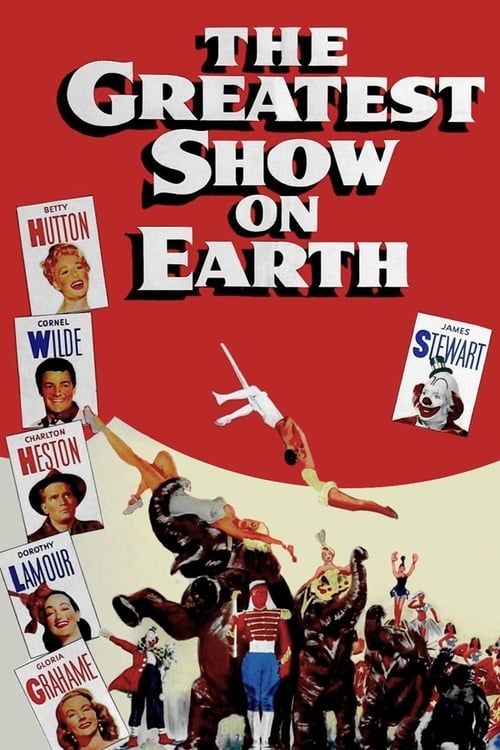
The Greatest Show on Earth

The Greatest Show on Earth

Best Picture

Director: Cecil B. DeMille

Studio: Paramount

The manager of a circus deals with the various personal and professional dramas of the performers.

From the Worthy Podcast

Animals in Film – the good and the bad. What animals in film did you grow up loving and what animals scared you because of how they appeared in film!?

Animal Abuse and the Changes Made So Far:

Electrocuting an Elephant (1903): Violence towards animals in film dates as far back as Thomas Edison’s 1903 silent short, Electrocuting an Elephant. As the title soberly implies, the 90-second film shows the fatal electrocution of Topsy the elephant in Luna Park, Coney Island. Edison initially planned to hang the animal (seriously) before the American Society for the Prevention of Cruelty to Animals intervened. An estimated 1,500 people witnessed the event, and Edison Studios made it available for a wider audience’s viewing pleasure via their coin operated kinetoscopes.

As many as 100 horses died in the making of the 1926 version of "Ben Hur."

In 1939 two horses were killed in the filming of "Northwest Mounted Police" and two more in "Jesse James." The horses in "Jesse James" were wearing movie blinkers with eyes painted on them. Unable to see, the horses had no idea they were running off a 75-foot cliff over white water until it was too late. The footage was impressive, the stuntman was well-paid, and the horses were dead.

This was the single biggest turning point in the history of Hollywood's treatment of animals. Word about the deaths got out and there was a tremendous furor. In reaction to the outcry, the Hays Office worked with the AHA (which stands for American Humane Association )to write guidelines for animal performances. Starting in 1940, the AHA was granted access to sets. The Hays Office, well known for prissy extremes such as insisting that marital bedrooms feature twin beds and that Betty Boop dress more modestly, also banned apparent animal cruelty. Films were submitted to the office before release to get a certificate of approval and often changes were demanded before a certificate was issued.

All Categories (31)

Best Motion Picture

The Greatest Show on Earth— Cecil B. DeMille, Producer
Winner
High Noon— Stanley Kramer, Producer
Ivanhoe— Pandro S. Berman, Producer
Moulin Rouge— Romulus Films
The Quiet Man— John Ford and Merian C. Cooper, Producers

Actor

Gary Cooper— High Noon {"Will Kane"}
Winner
Alec Guinness— The Lavender Hill Mob {"Holland"}
José Ferrer— Moulin Rouge {"Toulouse-Lautrec"}
Kirk Douglas— The Bad and the Beautiful {"Jonathan Shields"}
Marlon Brando— Viva Zapata! {"Emiliano Zapata"}

Actor In A Supporting Role

Anthony Quinn— Viva Zapata! {"Eufemio Zapata"}
Winner
Arthur Hunnicutt— The Big Sky {"Zeb Callaway"}
Jack Palance— Sudden Fear {"Lester Blaine"}
Richard Burton— My Cousin Rachel {"Philip Ashley"}
Victor McLaglen— The Quiet Man {"Red Will Danaher"}

Actress

Shirley Booth— Come Back, Little Sheba {"Lola Delaney"}
Winner
Bette Davis— The Star {"Margaret Elliot"}
Joan Crawford— Sudden Fear {"Myra Hudson"}
Julie Harris— The Member of the Wedding {"Frankie Addams"}
Susan Hayward— With a Song in My Heart {"Jane Froman"}

Actress In A Supporting Role

Gloria Grahame— The Bad and the Beautiful {"Rosemary Bartlow"}
Winner
Colette Marchand— Moulin Rouge {"Marie Charlet"}
Jean Hagen— Singin' in the Rain {"Lina Lamont"}
Terry Moore— Come Back, Little Sheba {"Marie Loring"}
Thelma Ritter— With a Song in My Heart {"Clancy"}

Directing

The Quiet Man— John Ford
Winner
Five Fingers— Joseph L. Mankiewicz
High Noon— Fred Zinnemann
Moulin Rouge— John Huston
The Greatest Show on Earth— Cecil B. DeMille

Writing (Motion Picture Story)

The Greatest Show on Earth— Fredric M. Frank, Theodore St. John, Frank Cavett
Winner
My Son John— Leo McCarey
The Narrow Margin— Martin Goldsmith, Jack Leonard
The Pride of St. Louis— Guy Trosper
The Sniper— Edna Anhalt, Edward Anhalt

Writing (Screenplay)

The Bad and the Beautiful— Charles Schnee
Winner
Five Fingers— Michael Wilson
High Noon— Carl Foreman
The Man in the White Suit— Roger MacDougall, John Dighton, Alexander Mackendrick
The Quiet Man— Frank S. Nugent

Cinematography (Black-And-White)

The Bad and the Beautiful— Robert Surtees
Winner
My Cousin Rachel— Joseph LaShelle
Navajo— Virgil E. Miller
Sudden Fear— Charles B. Lang, Jr.
The Big Sky— Russell Harlan

Cinematography (Color)

The Quiet Man— Winton C. Hoch, Archie Stout
Winner
Hans Christian Andersen— Harry Stradling
Ivanhoe— F. A. Young
Million Dollar Mermaid— George J. Folsey
The Snows of Kilimanjaro— Leon Shamroy

Music (Music Score Of A Dramatic Or Comedy Picture)

High Noon— Dimitri Tiomkin
Winner
Ivanhoe— Miklos Rozsa
Miracle of Fatima— Max Steiner
The Thief— Herschel Burke Gilbert
Viva Zapata!— Alex North

Music (Scoring Of A Musical Picture)

With a Song in My Heart— Alfred Newman
Winner
Hans Christian Andersen— Walter Scharf
Singin' in the Rain— Lennie Hayton
The Jazz Singer— Ray Heindorf, Max Steiner
The Medium— Gian-Carlo Menotti

Art Direction (Black-And-White)

The Bad and the Beautiful— Art Direction: Cedric Gibbons, Edward Carfagno; Set Decoration: Edwin B. Willis, Keogh Gleason
Winner
Carrie— Art Direction: Hal Pereira, Roland Anderson; Set Decoration: Emile Kuri
My Cousin Rachel— Art Direction: Lyle Wheeler, John DeCuir; Set Decoration: Walter M. Scott
Rashomon— Art Direction: Matsuyama; Set Decoration: H. Motsumoto
Viva Zapata!— Art Direction: Lyle Wheeler, Leland Fuller; Set Decoration: Thomas Little, Claude Carpenter

Art Direction (Color)

Moulin Rouge— Art Direction: Paul Sheriff; Set Decoration: Marcel Vertes
Winner
Hans Christian Andersen— Art Direction: Richard Day, Clave; Set Decoration: Howard Bristol
The Merry Widow— Art Direction: Cedric Gibbons, Paul Groesse; Set Decoration: Edwin B. Willis, Arthur Krams
The Quiet Man— Art Direction: Frank Hotaling; Set Decoration: John McCarthy, Jr., Charles Thompson
The Snows of Kilimanjaro— Art Direction: Lyle Wheeler, John DeCuir; Set Decoration: Thomas Little, Paul S. Fox

Special Effects

Plymouth Adventure— Metro-Goldwyn-Mayer
Winner

Film Editing

High Noon— Elmo Williams, Harry Gerstad
Winner
Come Back, Little Sheba— Warren Low
Flat Top— William Austin
Moulin Rouge— Ralph Kemplen
The Greatest Show on Earth— Anne Bauchens

Sound Recording

Breaking the Sound Barrier— London Film Sound Department
Winner
Hans Christian Andersen— Samuel Goldwyn Studio Sound Department, Gordon Sawyer, Sound Director
The Promoter— Pinewood Studios Sound Department
The Quiet Man— Republic Studio Sound Department, Daniel J. Bloomberg, Sound Director
With a Song in My Heart— 20th Century-Fox Studio Sound Department, Thomas T. Moulton, Sound Director

Costume Design (Black-And-White)

The Bad and the Beautiful— Helen Rose
Winner
Affair in Trinidad— Jean Louis
Carrie— Edith Head
My Cousin Rachel— Charles LeMaire, Dorothy Jeakins
Sudden Fear— Sheila O'Brien

Costume Design (Color)

Moulin Rouge— Marcel Vertes
Winner
Hans Christian Andersen— Clave, Mary Wills, Madame Karinska
The Greatest Show on Earth— Edith Head, Dorothy Jeakins, Miles White
The Merry Widow— Helen Rose, Gile Steele
With a Song in My Heart— Charles LeMaire

Documentary (Feature)

The Sea around Us— Irwin Allen, Producer
Winner
Navajo— Hall Bartlett, Producer
The Hoaxters— Dore Schary, Producer

Documentary (Short Subject)

Neighbours— Norman McLaren, Producer
Winner
Devil Take Us— Herbert Morgan, Producer
Man Alive!— Stephen Bosustow, Executive Producer
The Garden Spider (Epeira Diadema)— Alberto Ancilotto, Producer

Honorary Award

To George Alfred Mitchell for the design and development of the camera which bears his name and for his continued and dominant presence in the field of cinematography.
Winner
Cecil B. DeMille
IRVING G. THALBERG MEMORIAL AWARD
To Bob Hope for his contribution to the laughter of the world, his service to the motion picture industry, and his devotion to the American premise.
To Harold Lloyd, master comedian and good citizen.
To Joseph M. Schenck for long and distinguished service to the motion picture industry.
To Merian C. Cooper for his many innovations and contributions to the art of motion pictures.

Scientific Or Technical Award (Class I)

To EASTMAN KODAK COMPANY for the introduction of Eastman color negative and Eastman color print film. [Film]
Winner
To ANSCO FILM DIVISION OF GENERAL ANILINE AND FILM CORPORATION for the introduction of Ansco color negative and Ansco color print film. [Film]

Scientific Or Technical Award (Class II)

To TECHNICOLOR MOTION PICTURE CORPORATION for an improved method of color motion picture photography under incandescent light. [Photography]
Winner

Scientific Or Technical Award (Class III)

To the PROJECTION, STILL PHOTOGRAPHIC and DEVELOPMENT ENGINEERING DEPARTMENTS of METRO-GOLDWYN-MAYER STUDIO for an improved method of projecting photographic backgrounds. [Special Photographic]
Winner
To CARLOS RIVAS of Metro-Goldwyn-Mayer Studio for the development of a sound reproducer for magnetic film. [Sound]
To GUSTAV JIROUCH for the design of the Robot automatic film splicer. [Editorial]
To JOHN G. FRAYNE and R. R. SCOVILLE and WESTREX CORPORATION for a method of measuring distortion in sound reproduction. [Sound]
To PHOTO RESEARCH CORPORATION for creating the Spectra color temperature meter. [Photography]

Honorary Foreign Language Film Award

Forbidden Games - Best Foreign Language Film first released in the United States during 1952.
Winner

Music (Song)

"High Noon (Do Not Forsake Me, Oh My Darlin')" from High Noon— Music by Dimitri Tiomkin; Lyrics by Ned Washington
Winner
"Am I In Love" from Son of Paleface— Music and Lyrics by Jack Brooks
"Because You're Mine" from Because You're Mine— Music by Nicholas Brodszky; Lyrics by Sammy Cahn
"Thumbelina" from Hans Christian Andersen— Music and Lyrics by Frank Loesser
"Zing A Little Zong" from Just for You— Music by Harry Warren; Lyrics by Leo Robin

Short Subject (Cartoon)

Johann Mouse— Fred Quimby, Producer
Winner
Little Johnny Jet— Fred Quimby, Producer
Madeline— Stephen Bosustow, Executive Producer
Pink and Blue Blues— Stephen Bosustow, Executive Producer
Romance of Transportation— Tom Daly, Producer

Short Subject (One-Reel)

Light in the Window: The Art of Vermeer— Boris Vermont, Producer
Winner
Athletes of the Saddle— Jack Eaton, Producer
Desert Killer— Gordon Hollingshead, Producer
Neighbours— Norman McLaren, Producer
Royal Scotland— Crown Film Unit

Short Subject (Two-Reel)

Water Birds— Walt Disney, Producer
Winner
Bridge of Time— London Film Production
Devil Take Us— Herbert Morgan, Producer
Thar She Blows!— Gordon Hollingshead, Producer

Writing (Story And Screenplay)

The Lavender Hill Mob— T. E. B. Clarke
Winner
Breaking the Sound Barrier— Terence Rattigan
Pat and Mike— Ruth Gordon, Garson Kanin
The Atomic City— Sydney Boehm
Viva Zapata!— John Steinbeck
WorthyWorthy

The breakdown of every Best Picture winner from past to present.

Newsletter

New episodes, in your inbox.

Worthy Podcast

Disclaimer: This website is a non-profit, fan-made project created for educational and entertainment purposes only. It is not associated with, affiliated with, endorsed by, or in any way officially connected to the Academy of Motion Picture Arts and Sciences (AMPAS), the Academy Awards, or the Oscars. "Academy Awards," "Oscars," and the Oscar statuette design are registered trademarks and copyrighted property of the Academy of Motion Picture Arts and Sciences. All other trademarks, service marks, and trade names referenced herein are the property of their respective owners. No copyright infringement is intended. All film data, ratings, and historical information are compiled from publicly available sources.